HUST and the Hanoi Department of Science and Technology Accelerate from Policy to Product
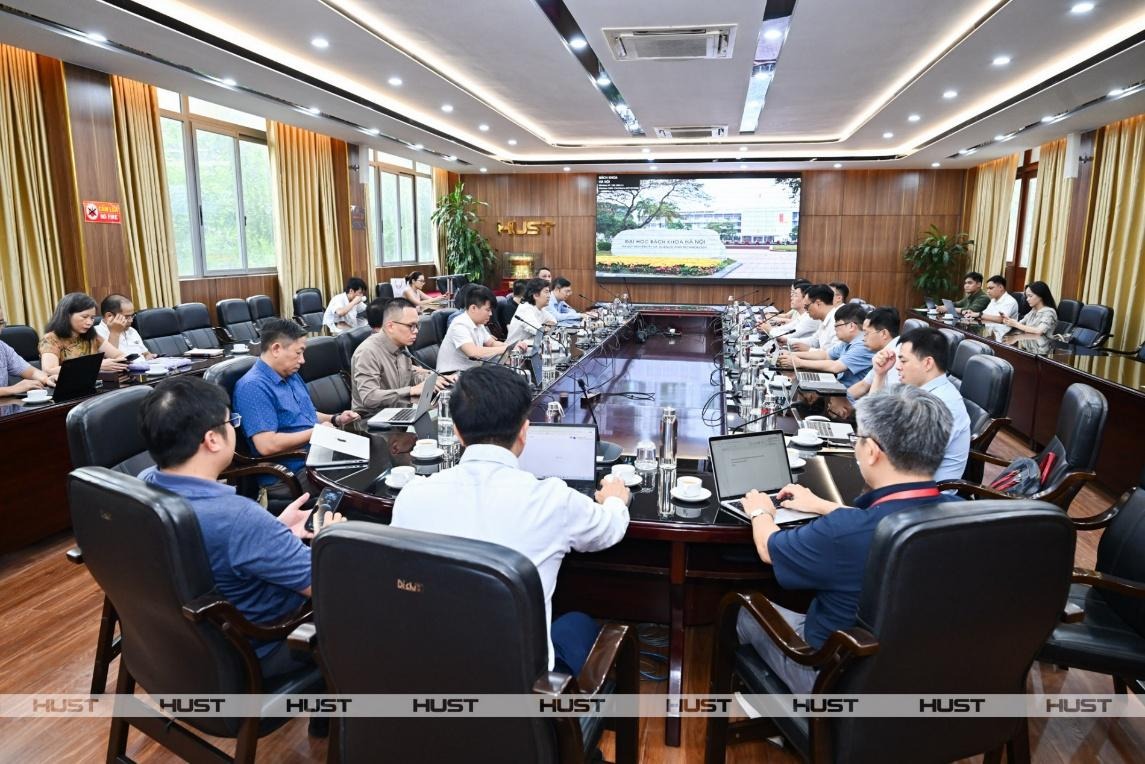
The working session took place on the afternoon of September 9, chaired by Assoc. Prof. Ta Hai Tung, Vice President of HUST, with the attendance of Dr. Cu Ngoc Trang, Director of the Hanoi Department of Science and Technology.
Products from the "Three-Party" Collaboration Model
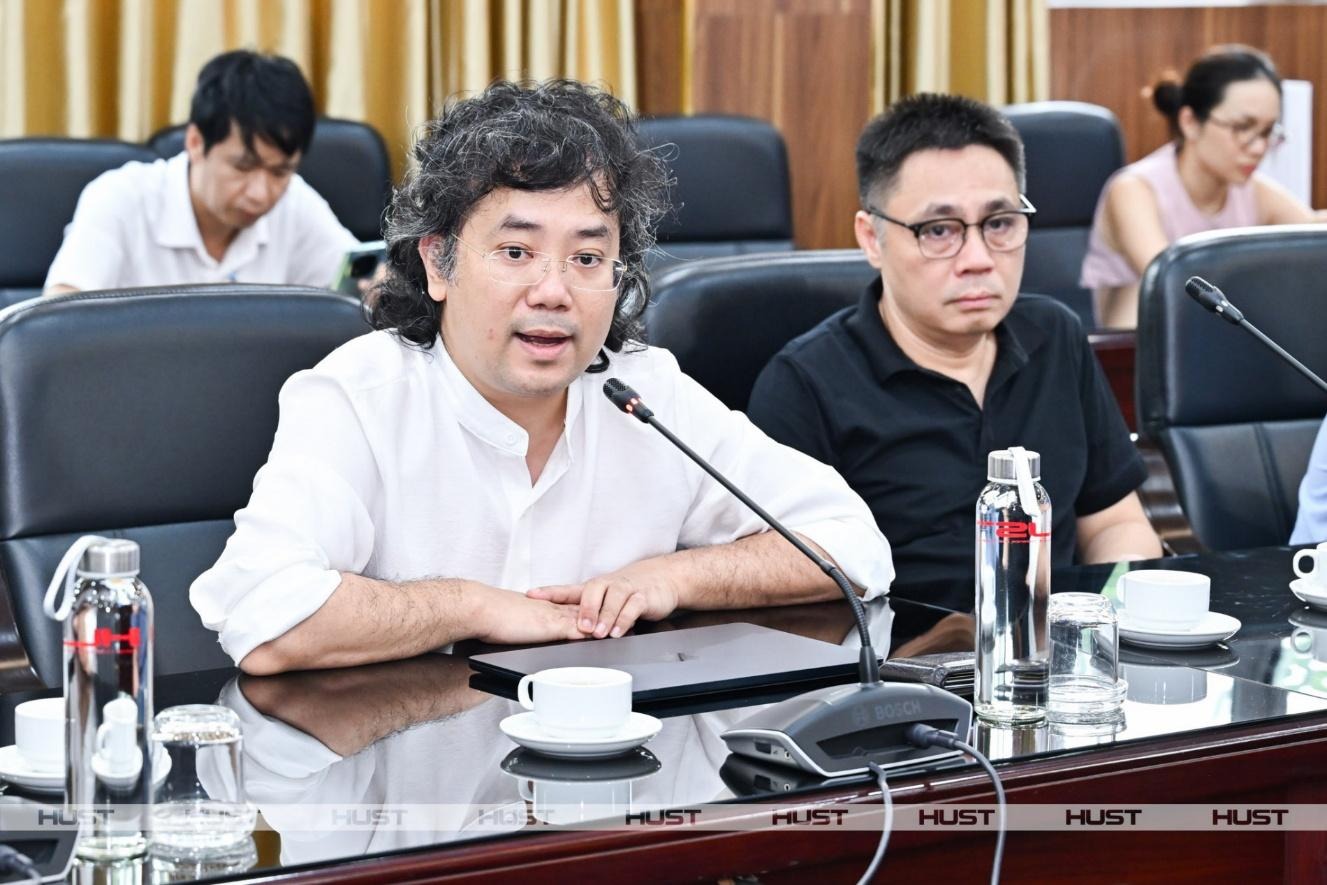
"The greatest wish of scientists today is speed—to see results early and generate inspiration." Assoc. Prof. Ta Hai Tung emphasized this spirit at the meeting as both sides reviewed their collaborative achievements and discussed key tasks for the upcoming period.
The first experimental version of this product was introduced at an international exhibition on fire safety, rescue, and relief equipment. This is considered an exemplar of the approach that both Hanoi and HUST are striving for: starting from the city's practical problems, mobilizing the university's research capabilities, and leveraging corporate resources to create usable products.
Beyond the technology sector, learning materials developed by HUST are also being integrated into the city's digital transformation programs. In AI training programs for Hanoi's leaders and key officials, the specialized content co-developed by the HUST team has received highly positive feedback.
Notably, stemming from a proposal for a doctoral scholarship program presented at the city's Steering Committee conference on implementing Resolution 57 in March, Hanoi has materialized this into a policy supporting the training of 1,000 PhDs to develop an elite workforce.
According to Assoc. Prof. Ta Hai Tung, the capital is currently one of the leading localities in implementing all three pillars of Resolution 57: science and technology, innovation, and digital transformation. What is remarkable is how higher-level authorities proactively go to the grassroots level, working directly with universities, institutes, and scientists to formulate highly practical policies.
Six Core Task Groups
Building on these initial results, Dr. Cu Ngoc Trang proposed that both sides shift to a more concrete, step-by-step approach for each task, clearly assigning responsibilities and timelines.

Second, establishing the Capital's Innovation Center at HUST. According to Dr. Cu Ngoc Trang, this is a designated task within HUST's strategic direction to become a leading higher education institution in Asia. Hanoi aims to leverage the mechanisms of the Capital Law to shorten procedures and paperwork, facilitating the rapid formation and support of the Center.
Third, rolling out a funding program for newly enrolled doctoral students in 2026. Hanoi identifies HUST as a priority institution, aiming to support approximately 20 to 30 PhD candidates whose research topics directly address the capital's practical problems.
Fourth, materializing Hanoi's 30 major challenges. The Department of Science and Technology proposed that HUST, with its strengths in engineering and technology, participate in developing a specific list of scientific tasks derived from the 30 major challenges recently announced by the city. The goal is to translate these broad challenges into orderable, implementable tasks that yield final products.
Fifth, selecting a key research program for the 2026–2030 period. Hanoi wishes to commission HUST for a visionary, long-term program capable of making a significant mark and leading the way, rather than assigning multiple fragmented tasks.
Sixth, leveraging the university's international collaboration ecosystem. The city desires to work with the university to tap into its network of scientists, alumni, startups, and international partners, particularly focusing on attracting the scientific and technological resources of overseas Vietnamese to serve the capital.
Based on the city's proposals, Assoc. Prof. Ta Hai Tung committed that HUST would rapidly translate these into tasks and programs aligned with the university's strengths. Simultaneously, HUST will coordinate closely with the Department to systematically bring these ideas into practical implementation.
Both sides will continue their close coordination, working through each specific item and monitoring progress in the coming time, with the ultimate goal of delivering concrete results, specific products, and measurable outcomes.
Photos: Duy Thanh
Author: Nguyễn Thu Huệ
Newer articles
Older articles
-
 HUST Strengthens International Research Connections at AF...
-
 A Brazilian Lecturer "Melts" into Hanoi University of...
-
 HUST Celebrates 70 Years of Global Partnerships, Friendship...
-
 Hanoi University of Science and Technology Wins Two Awards...
-
 Myanmar Students Experience Global Higher Education at Hanoi...
-
 Party General Secretary and State President To Lam Presents...
-
 Over 180 Outstanding Products Relive the 70-Year Science and...
-
 Assoc. Prof. Huynh Quyet Thang Receives the "Outstanding...
-
 HUST and Kyoto University Advance Interdisciplinary...
-
 "The Blank Canvas" and the Story of the Valedictorian Who...